Looking more senior is about judgment—not age
Professionals often receive confusing advice when preparing for promotion: dress for the job you want, look more executive, appear more polished.
The intention may be useful, but the execution can quickly go wrong. Some people buy clothing that feels stiff, overly conservative or disconnected from their personality. Others copy a leader whose body, industry and style have little in common with their own. The result may look “professional” while making the wearer feel like a visitor inside someone else’s wardrobe.
Looking more senior is not about looking older, wealthier or less expressive. Seniority is often read through intention, consistency and situational judgment. Your image should suggest that you understand the room, can make clear decisions and are comfortable carrying greater visibility.
Why the current wardrobe may feel too junior
A wardrobe can lag behind a career. This is common after graduation, a promotion, an industry change or a period of rapid growth.
Possible sources of friction include:
- Fit that appears casual or unfinished
- Clothing that worked for a previous role but lacks enough structure for current responsibilities
- Inconsistent levels of formality from one day to the next
- Trend-led pieces without reliable foundations
- Accessories or grooming choices that compete with the professional message
- A wardrobe built around comfort but not context
- Safe outfits that avoid mistakes yet communicate very little personality or direction
None of these automatically makes an outfit “bad.” The question is whether the wardrobe supports the level at which you are now expected to operate.
Seven ways to create a more senior professional image
1. Strengthen fit before buying more
Tailoring creates clarity. Pay attention to shoulder placement, sleeve and trouser length, waist definition, button strain and how a garment moves when you sit, reach or walk. A well-fitted mid-priced piece will often appear more authoritative than an expensive item that does not sit correctly.
2. Add structure selectively
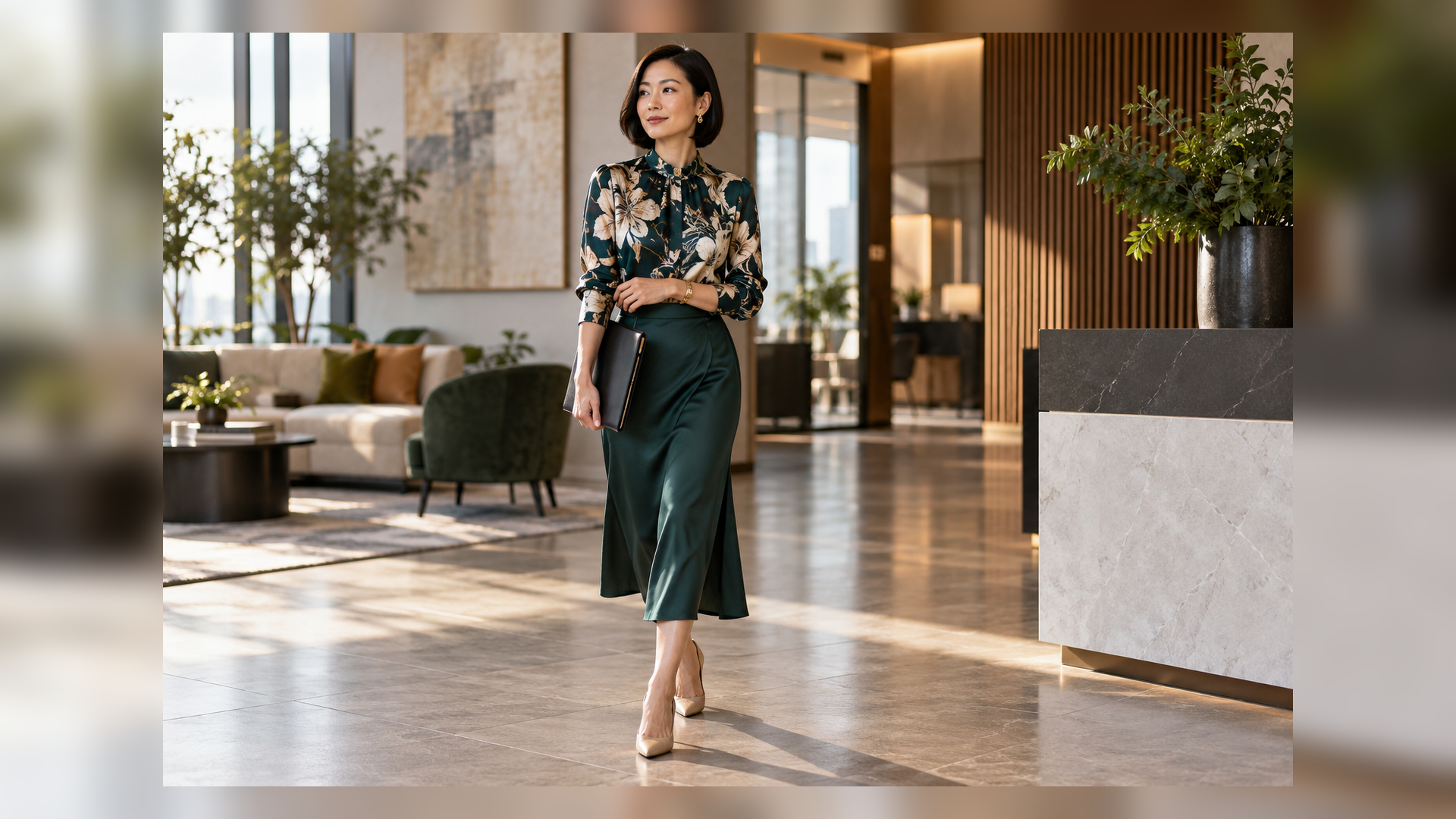
Structure can come from a jacket, shaped dress, crisp collar, defined shoulder, substantial fabric or clean handbag. You do not need to wear a traditional suit every day. One structured element can give a softer outfit more direction.
3. Improve fabric and condition
Senior-level dressing often looks deliberate because the materials hold their shape and the garments are maintained. Replace items that are visibly worn, transparent in the wrong places or difficult to keep presentable. Choose fabrics appropriate to your climate and real workday; Houston heat does not negotiate with fantasy wardrobes.
4. Use color with a plan
Neutral does not automatically mean senior, and bright does not automatically mean junior. A clear color strategy helps you create authority while preserving personality. You might use a strong signature color near the face, build tonal combinations or anchor expressive pieces with dependable neutrals.
5. Refine the finishing details
Shoes, bags, eyewear, jewelry, grooming and hair affect the overall level of polish. The aim is cohesion. Choose details that repeat the quality, shape or mood of the outfit rather than introducing several unrelated ideas.
6. Match the visibility of the moment
Every workday does not require the same intensity. Create distinctions between ordinary operations, leadership visibility, presentations, client interaction and external events. Seniority includes knowing when to elevate and when a simpler approach is fully appropriate.
7. Build consistency
People form impressions through patterns. A dependable personal standard makes your image easier to understand. Consistency does not mean repetition without imagination. It means your choices feel connected across different settings.
Preserve the elements that make the style yours
Personal style can strengthen memorability and confidence. The goal is to identify which elements are authentic and which elements create friction.
You may love color, statement jewelry, feminine silhouettes, dramatic eyewear, print or modern minimalism. Keep the elements that support your identity, then control their scale, placement and level of formality according to the room.
A strong style strategy answers two questions at once:
- Does this support the professional responsibility I carry?
- Do I still recognize myself?
If only one answer is yes, the strategy needs more work.
Create three leadership-ready outfit formulas
Formulas reduce decision fatigue and create reliable standards without turning your wardrobe into a uniform.
Everyday leadership
Choose a polished base suitable for meetings, collaboration and routine visibility. Focus on comfort, fit and repeatability.
High-visibility authority
Create an elevated formula for presentations, interviews, executive meetings and important client conversations. Add stronger structure, intentional color and refined finishing details.
Relationship-building
Develop a look for networking, conferences and community events. It should feel approachable, memorable and easy to wear for several hours.
Photograph successful combinations and note the situations they serve. This turns your wardrobe into a system instead of a daily experiment.
Dress for the next level by preparing for its real demands
The strongest professional image is not based on a costume version of leadership. It is built around the actual responsibilities, environments and relationships of the role you want.
Study the rooms, strengthen the decisions and keep the personality. You should look like yourself—with greater clarity.